

ICT Strategy and Policy

An ICT Strategy is a document which outlines how your organisation’s ICT will support your overall corporate objectives and strategy over a defined period, such as short term (12 months), medium term (3 to 5 years), or long term (10 years).
It should be a living, breathing document that is reviewed regularly and tweaked when required to reflect emerging trends and new technologies coming onto the market, which your organisation might benefit from investing in.
ICT Policy is to assist the organisation in ensuring that they have access to best practices for the identification, protection and management of ICT and therefore maximizing the benefits and returns from public investment in ICT.
Some of our projects include:
UNDP:
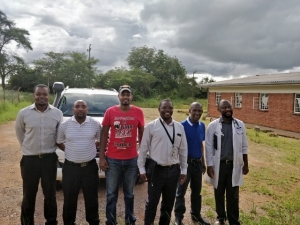
- Developed the ICT Policy Framework for Zimbabwe Ministry of Health and Child Care funded by UNDP.
USAID
- Development of a National ICT Strategy for Kosovo.

Cyber Security

Cybersecurity is the practice of protecting critical systems and sensitive information from digital attacks. Also known as information technology (IT) security, cybersecurity measures are designed to combat threats against networked systems and applications, whether those threats originate from inside or outside of an organization.
Cybersecurity domain areas include:
- Critical infrastructure security – Practices for protecting the computer systems, networks, and other assets that society relies upon for national security, economic health, and/or public safety.
- Network security – Security measures for protecting a computer network from intruders, including both wired and wireless (Wi-Fi) connections.
- Application security – Processes that help protect applications operating on-premises and in the cloud. Security should be built into applications at the design stage, with considerations for how data is handled, user authentication, etc.
- Cloud security – Specifically, true confidential computing that encrypts cloud data at rest (in storage), in motion (as it travels to, from and within the cloud) and in use (during processing) to support customer privacy, business requirements and regulatory compliance standards.
- Information security – Data protection measures, such as the General Data Protection Regulation (GDPR) that secure your most sensitive data from unauthorized access, exposure, or theft.
- End-user education – Building security awareness across the organization to strengthen endpoint security. For example, users can be trained to delete suspicious email attachments, avoid using unknown USB devices, etc.
- Disaster recovery/business continuity planning – Tools and procedures for responding to unplanned events, such as natural disasters, power outages, or cybersecurity incidents, with minimal disruption to key operations
Some of our projects include:
Smart Africa:
- Developed a continental Cybersecurity blueprint for Africa for Smart Africa Secretariat.
World Bank:
- Developed a Business Continuity and Disaster Recovery Plan that defines procedures and plans for the recovery of data and critical technology in the event of a disaster for Sierra Leone Ministry of Finance and Economic Development.

IT Infrastructure

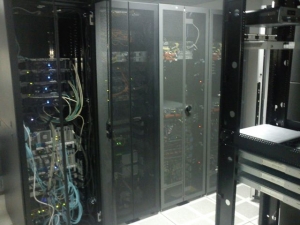
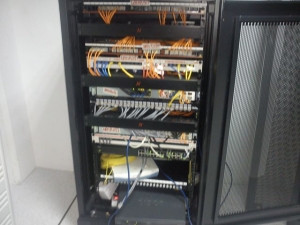
IT infrastructure refers to the composite hardware, software, network resources and services required for the existence, operation and management of an enterprise IT environment. It allows an organization to deliver IT solutions and services to its employees, partners and/or customers and is usually internal to an organization and deployed within owned facilities. IT Infrastructure forms the foundation of any digital transformation initiative and is critical to the successful delivery of applications and services.
Some of our projects include:
Public Financial Management

World Bank:
- Project management of Integrated Financial Management Information System (IFMIS) for Sierra Leone Ministry of Finance.
- Advisory support for the IFMIS rollout and IBEX enhancement for Ethiopia Ministry of Finance and Economic Cooperation.

Domestic Revenue Mobilization

Domestic Resource Mobilization (DRM) is the process through which countries raise and spend their own funds to provide for their people – is the long-term path to sustainable development finance. DRM not only provides governments with the funds needed to alleviate poverty and deliver public services, but is also a critical step on the path out of aid dependence. The way in which domestic revenue is mobilised is important. For example, taxes have the potential to improve or deepen inequality, or can influence behaviours to improve environmental and health outcomes.
Some of our projects include:
DFID:
- Design and implementation of an Integrated Government Tax Administration System designed to improve business processes, enhance revenue collection and bring efficiencies in tax collection for Papua New Guinea Ministry of Finance and Internal Revenue Commission.
- Provide advisory support to the Uganda Revenue Authority (URA).
- Advise on procurement of Tax Administration System, Indonesia.
- Technical Assistance to Ministry of Finance Revenue Department, Afghanistan.
World Bank:
- Technical and Reform Advisory Support to the National Revenue Authority, Sierra Leone.
Digital inclusion
